
A closer look at the range.
Step through our core woven fabric and bag lines — PP woven fabric rolls, printed PP woven bags, and application-ready sacks. Scroll or use the arrows to move between products.
Tab 1 of 12: Anti-slip Woven Fabric
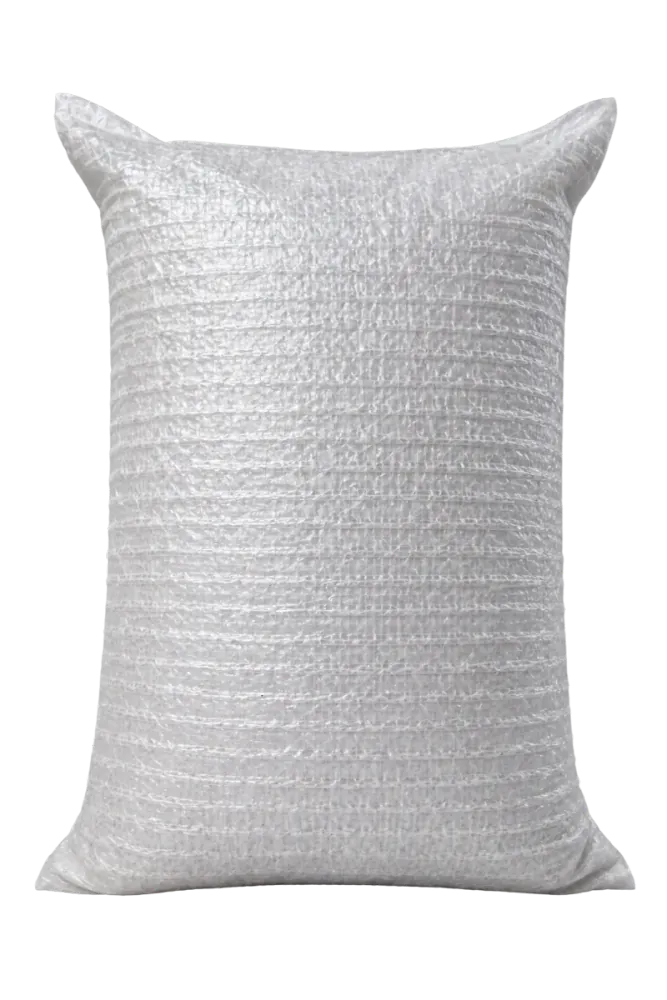
Fabric Roll · Anti-slip Coated
1. Anti-slip Woven Fabric
Our flagship Anti-slip PP Woven Fabric is engineered with a high-friction surface coating that keeps stacked bags from sliding during palletizing, transit, and warehouse storage. Built on 100% virgin polypropylene tape weave, it combines the structural strength of standard PP woven fabric with a non-slip finish that enables higher, more stable stacks — making it the preferred choice for cement, fertilizer, rice, and sugar bag converters worldwide.
View product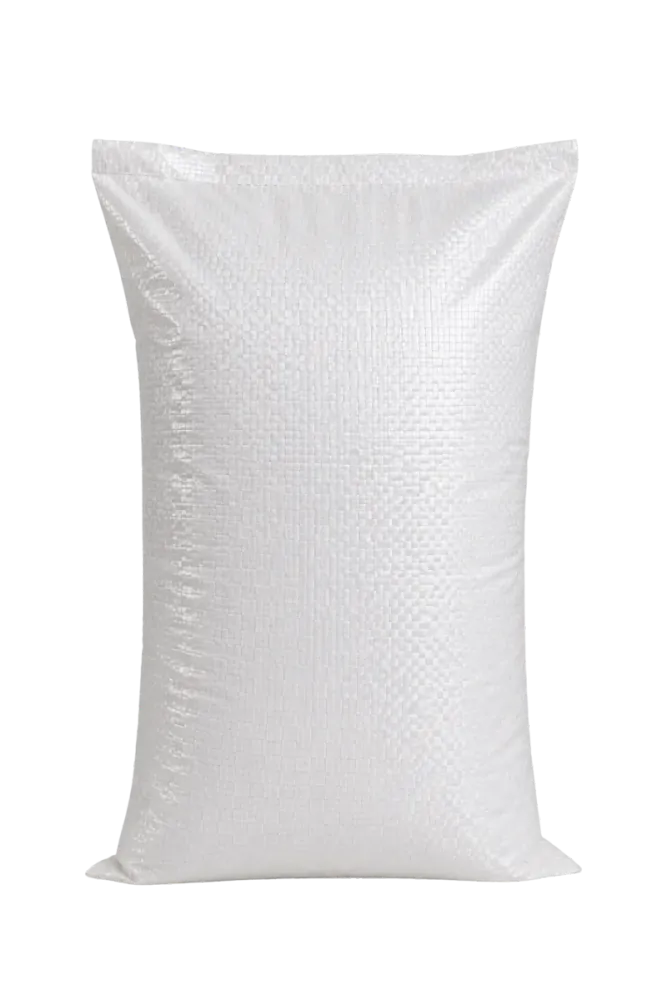
Resin to roll
What PP woven fabric is, and how it's made
PP woven fabric is a technical textile made entirely from polypropylene resin rather than a natural fibre or synthetic blend. Four steps take a granule of resin to a finished roll — and every product on this page starts from the same four.
Extrude
Resin to film
Polypropylene granules are extruded through a flat die into a thin continuous film, which is cooled and held to an even gauge before it is slit.
Slit & draw
Film to tape
The film is slit into narrow tapes and drawn — stretched under controlled heat — to align the polymer chains along the tape's length. Drawing is what gives PP tape its tensile strength: undrawn film tears easily, a properly drawn tape carries significant load for its weight.
Weave
Tape to fabric
The tapes reach the loom on bobbins. On circular or flat looms one set (the warp) runs lengthwise while a second set (the weft) interlaces across it — tape over tape and under tape — in the plain 2×2 weave used across our range.
Finish
Fabric to product
The woven fabric is wound onto rolls, ready either to leave the loom as-is or to be laminated, printed, and converted into finished bags.
100% virgin polypropylene, on every line
Every product in our range is built on virgin PP tape, not reprocessed or reclaimed resin, because virgin PP gives more consistent tensile strength and a cleaner surface for lamination and printing.
Three levers
How GSM, width, and lamination drive product selection
Three decisions place a buyer on a line: how much load the fabric has to carry, how wide the roll runs, and what sits on its surface.
Lever 01
GSM — strength and cost
GSM — grams per square metre — is the single number that says the most about a woven fabric's strength and cost. It is a function of tape width, tape thickness and weave density, and a heavier construction costs more per square metre but carries more load. The right GSM matches what the packaging actually has to hold or resist rather than defaulting to the heaviest option available.
- Across the catalogue
- 60–150 GSM
- 50 kg cement bag
- 90–115 GSM, >3,500 N warp
- Ventilated produce bag
- 60–80 GSM
Lever 02
Width — matching your conversion line
Width is mostly about matching roll width to how the buyer converts the fabric. A wider roll allows larger bag formats, lower-seam-count conversion, and — for ground cover or shade netting — fewer seams in the finished sheet.
- Standard PP Woven Fabric Roll
- 20–90 in (50–230 cm)
- Anti-slip and PP Laminated rolls
- up to 120 in (50–305 cm)
- UV Stabilized PP Woven Fabric
- up to 144 in (75–366 cm)
Lever 03
Lamination — three constructions, three jobs
Lamination is the third decision, and it covers three distinct constructions chosen for different reasons: cost, print surface, or moisture barrier.
Unlaminated
Lowest costThe fabric's natural woven surface — our Standard PP Woven Fabric Roll and Ventilated PP Woven Bag. The right call when the pack needs neither a barrier nor a print-ready surface.
Film laminated
15–25 micron filmA biaxially oriented polypropylene (BOPP) film is bonded to the woven base — 15–25 microns on our PP Woven Fabric, 18–25 microns on the PP Rice Bag and the Custom Printed PP Woven Bag — producing a smooth, glossy surface that accepts flexographic printing in up to six colours. Choose it when retail shelf appearance matters.
PP coated
15–30 GSM coatingA polypropylene layer coats the inner surface — 15–30 GSM on the PP Laminated Woven Fabric Roll, 15–25 GSM on the PP Laminated Fertilizer Bag, 15–22 GSM on the PP Laminated Animal Feed Bag — to build a moisture barrier. The priority for fertilizer, animal feed and sugar, where contents are hygroscopic and print quality matters less than keeping moisture out.
Two ways to buy
Fabric rolls vs. converted bags: what's the difference
Both come off the same weave. What separates them is where the conversion step happens — on our floor or on yours.
Fabric roll
Continuous material, converted by you
A fabric roll is the woven material itself, sold as continuous fabric on a roll rather than as a finished bag. Buyers who choose fabric rolls typically run their own cutting, stitching or lamination-finishing lines and want control over the exact bag dimensions, seam placement or sheet size their process needs, rather than ordering a pre-set bag design.
Lines sold this way
Suits a buyer with an in-house cut-and-stitch or lamination line.
Converted bag
Finished, printed, ready to fill
A converted bag is a finished product: cut to length, with the bottom sewn or heat sealed, printed where specified, and ready to fill. The PP Woven Cement Bag is available in open-mouth or valve-bottom construction with a sewn or heat-sealed bottom; the PP Laminated Fertilizer Bag and PP Laminated Animal Feed Bag offer sewn or block-bottom construction with an optional side gusset; the PP Rice Bag and Custom Printed PP Woven Bag arrive fully printed and ready for a filling line.
Lines sold this way
Suits a buyer who needs finished packaging without running conversion.
The choice between the two isn't really about product quality — it's about where the conversion step happens. A buyer with an in-house cut-and-stitch or lamination line gets more control by buying fabric roll; a buyer without that capacity gets a ready-to-fill product by ordering a converted bag.
By end use
Which industries each line serves
Our product range maps to a specific set of end-use industries, and the right starting point is usually the industry rather than the product name.
Cement and building materials
Built to IS 11652 with a sewn or heat-sealed bottom; the anti-slip surface holds the stack during palletizing.
Fertilizer and agrochemicals
Both use a PP coating as a moisture barrier.
Rice, grains, and sugar
Lamination both protects the contents and presents them.
Animal feed
A PP-coated inner layer helps preserve feed quality in storage.
Agriculture and outdoor use
HALS light-stabilized fabric for ground cover and shade netting; ventilated bags for produce that needs air circulation.
Retail and branded packaging
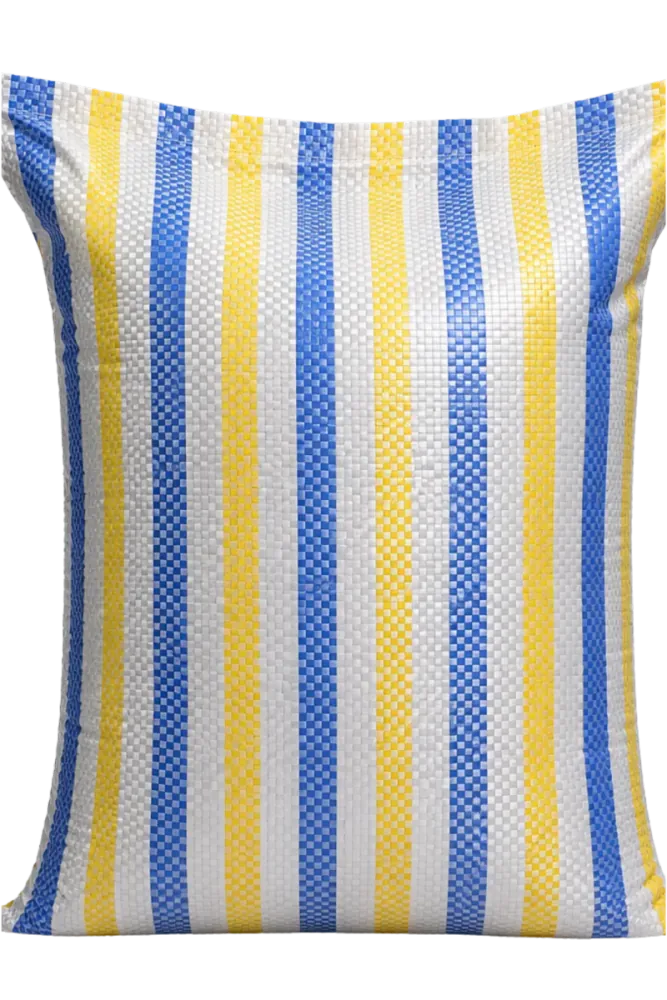
Both built around a PP surface for multi-colour flexographic artwork.
Chemicals and general industrial
Chosen case by case for moisture barrier versus cost.
What we certify, and what we don't
Lex Polytex holds ISO 9001:2015 certification for its manufacturing operations — the only management-system certification we currently hold. Several lines used in food-adjacent packaging, including the PP Rice Bag, PP Laminated Sugar Bag, PP Woven Fabric, and Custom Printed PP Woven Bag, use a food-contact layer manufactured from material that meets FDA food-contact specifications. That is a statement about the material, not a certificate we hold: Lex Polytex does not hold BRCGS, FSSC 22000, halal, or US FDA registration or certification, and a buyer whose own compliance process needs one of those specific credentials should confirm that requirement with us directly.
Before you send it
What to specify in an RFQ
The more specific the request, the faster we can quote accurately and the faster a sample or trial order can move. A specification-led RFQ gets there in one round instead of several rounds of clarifying questions. At minimum, tell us:
Product line and category
Fabric roll or converted bag, and which construction above fits your application.
GSM
A target figure or range within the product's published range. If you're not sure, describe the load or handling the packaging needs to survive and we'll recommend a GSM.
Width or bag dimensions
Roll width in inches or centimetres for fabric, or bag width by length for a converted bag.
Lamination, if any
None, film (BOPP) laminated, or PP coated — and whether a moisture barrier or a printable surface is the priority.
Printing requirements
Number of colours, artwork status, and finish (gloss or matte) for laminated lines.
Bag construction, for converted bags
Mouth type (open or valve), bottom type (sewn, heat sealed, or block bottom), and capacity.
Colour and special treatment
UV stabilization, anti-slip coating, or antistatic treatment where relevant to the product line.
Target order quantity
Minimum order quantities vary by line, from fabric rolls measured in tonnes to finished bags measured in unit counts, so tell us the volume you're planning.
Certification documentation
Anything your own compliance process requires — we can confirm what we hold before you commit to a specification.
Specification sheets, sample requests, and RFQs are handled through our contact form; the more of the above you can specify upfront, the more precise the first quote will be.
Send an RFQSourcing for export
Sourcing for export?
Export buyers usually arrive with a specification rather than a product name: a GSM band, a bag size, a lamination requirement, and a compliance document their customs broker or quality team has asked for. Every product above can be built to a supplied specification, and the specification sheet on each product page lists the GSM range, width, lamination options, printing capability and minimum order quantity we work to.